Find where the enquiry journey is breaking
A practical diagnostic order for lead generation
Google Ads clicks but no enquiries usually point to a problem with the traffic, the website, the offer or the measurement. Check that someone can actually contact you, confirm what counts as a conversion, then investigate the searches and locations consuming your budget. More clicks will not repair a broken enquiry journey.
Start with three questions: are enquiries arriving, can the website receive them, and is Google Ads recording the right actions? Answering those questions separates a reporting problem from a commercial one before you change bids or spend.
Our Google Ads management approach combines account evidence with client feedback. A form submission tells us that an action happened; the business still needs to tell us whether it was a suitable opportunity.
What You’ll Learn in this Guide:
By the end of this guide, you’ll understand:
- How to test the enquiry journey and conversion tracking.
- How search intent, geography and bidding can affect lead generation.
- What to investigate on the landing page before increasing spend.
- How to judge a short run of zero enquiries without guessing.
Reading Time:
7–9 Minute Read
Last Updated:
October 2026
Author:
Mark Finlay | Colne Digital
First check whether people can enquire
Test the actual form on a phone and a desktop. Submit a realistic test enquiry, check the confirmation and confirm it reaches the right inbox or system. A successful-looking screen does not prove delivery. Check click-to-call links and booking routes too, where they are part of the campaign journey.
If the problem began suddenly, ask what changed: a website update, plugin setting, form edit, consent change or new landing page. Compare the timing with the drop in enquiries. A technical fault needs attention even if the campaign is new or learning.
A Colne Digital Account Observation
In an account we worked on, recorded conversions dropped to zero for two days. The advertising account did not reveal an obvious explanation. Further investigation found that a website change had broken the enquiry form’s submit button.
That finding changed the diagnosis: the contact route itself was faulty. The useful lesson is to test the customer’s next step before assuming the campaign needs more traffic.
Check that the report measures a real enquiry
An enquiry can arrive without being recorded correctly. The reverse can happen too: an account may count a button click or page visit even though nobody completed a form. Inspect the conversion actions and test whether the intended action fires once, at the right point.
Google’s conversion measurement guidance explains how advertisers define valuable actions. Those definitions need to match your objective. A contact-page visit can be useful diagnostic information, but it should not be mistaken for a completed enquiry.
Also compare the same reporting period and allow for the time between a click and a later enquiry. Do not treat a difference between Google Ads and your inbox as proof of one specific fault without checking how each source records activity.
Review the searches behind the clicks
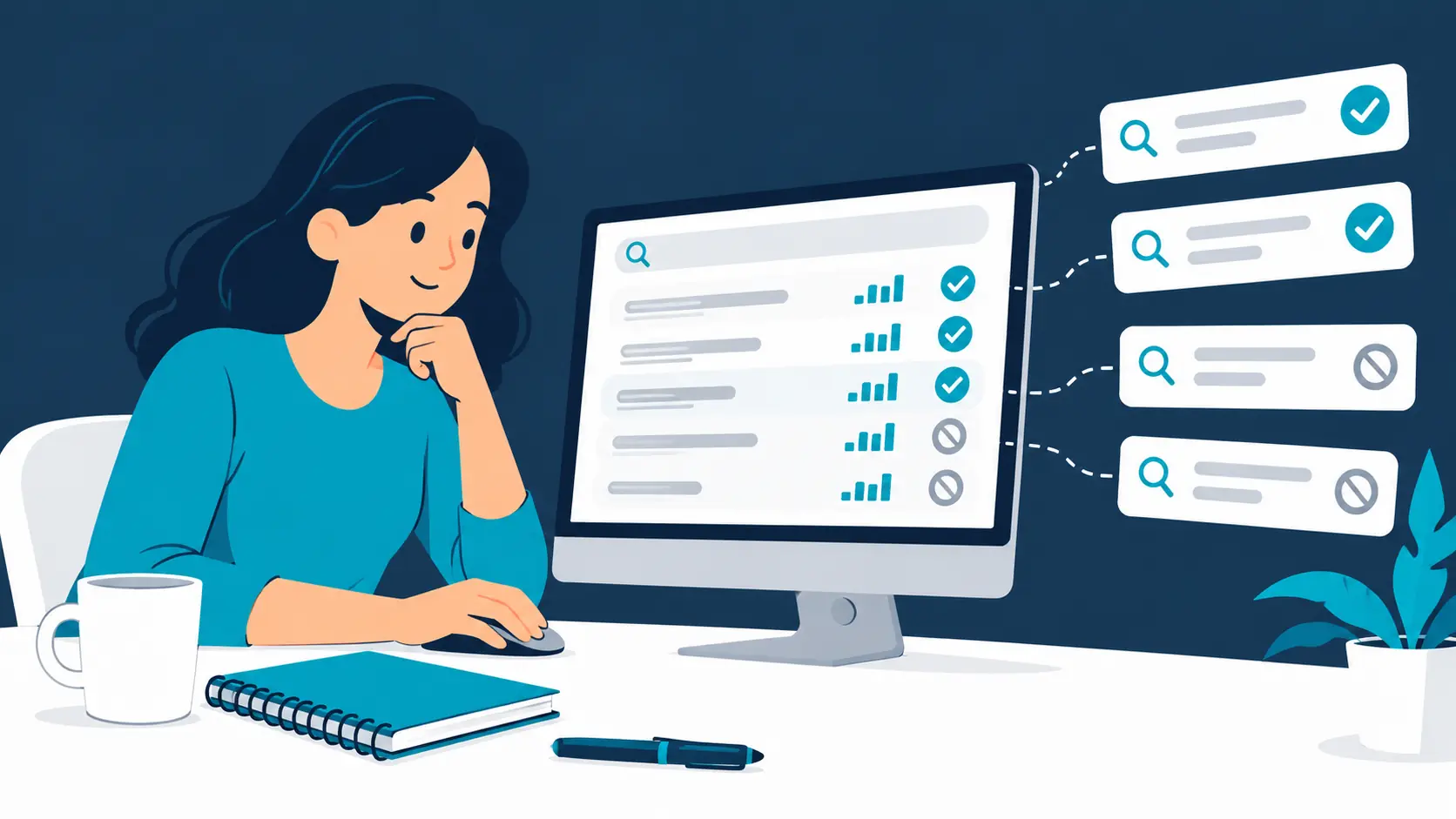
For Search activity, inspect available search-term data rather than judging relevance from the keyword list alone. A service keyword can attract people researching a topic, seeking employment or looking for something you do not sell. Not every query will be visible, so treat the report as evidence rather than a complete record of every search.
As an illustrative example, “how to replace a window handle” suggests a different need from “double glazing installation quote”. Both concern windows; they do not necessarily belong in the same enquiry campaign. The right decision depends on the services the advertiser actually provides.
Review Google’s keyword matching guidance when interpreting that relationship. Exact match can include the same meaning or intent, rather than only an identical string of words. Use suitable exclusions carefully so an attempt to remove irrelevant traffic does not block work you want.

Check geography and the campaign objective
A local service campaign should reflect where the business can fulfil work profitably. Review location settings alongside the enquiries received. Someone interested in an area is not necessarily physically there; Google’s advanced location options explain the distinction. Choose the setting that fits the customer journey rather than applying one rule to every business.
Next, review the bidding objective. A strategy focused on clicks is designed around traffic, whereas conversion-focused bidding uses conversion signals. Click-focused bidding can still produce enquiries, and changing strategy does not guarantee leads. The question is whether the objective and measurement support the outcome you need. Google sets out these differences in its guide to choosing a bid strategy.
Match the landing page to the promise
If relevant visitors can contact you but choose not to, examine what they see after the click. A specific advert should lead to information about that service, not leave visitors searching a broad homepage for the offer they expected.
Make the service, coverage and next step easy to understand. Check mobile readability, loading behaviour and form usability. Include genuine evidence that helps customers decide, such as relevant work, clear service details or approved reviews. Remove avoidable friction without removing information you genuinely need to qualify the enquiry.
The commercial offer matters as well. Availability, price expectations and how a quotation works can influence the decision. Advertising cannot compensate indefinitely for an offer that does not suit the audience. Agree which issue you are testing before changing several things at once.
Decide whether the evidence is sufficient
A handful of relevant clicks and no enquiries may be inconclusive. A sustained pattern involving meaningful spend and suitable traffic deserves a different response. Consider the sales cycle, historical behaviour and expected enquiry value alongside the number of clicks.
There is no universal click count that guarantees a lead. Keep monitoring and protect the budget while gathering evidence; do not use a learning period as a reason to ignore a broken form or clearly unsuitable traffic.
For budget context, see our UK Google Ads cost guide. Increase spend only when you understand what the existing spend is buying and why a larger test is justified.

Ready to Take the Next Step?
If your campaign is attracting traffic but too few worthwhile enquiries, request a FREE Google Ads audit. We can review the account and discuss where further investigation is needed across targeting, measurement and the enquiry journey.
Frequently Asked Questions About Enquiries and Conversion Problems
Answers to your questions about clicks, enquiries and measurement.
Use these answers alongside your own campaign data and business objectives when deciding what to do next.
Possible causes include unsuitable traffic, a weak landing page, a faulty contact route or incorrect measurement. Test the enquiry journey and tracking, then inspect search relevance, geography and campaign objectives before deciding what to change.
There is no universal number. It depends on the offer, audience, website and buying journey. Judge enough relevant traffic over a suitable period, using actual enquiries and their quality alongside the platform report.
Investigate first. Pausing affected activity may be sensible if a broken contact route or clearly wasted spend is confirmed. A small sample with no enquiries, by itself, does not establish that the campaign cannot work.
Not automatically. The conversion actions must represent meaningful outcomes and work correctly. A different bidding objective cannot repair an unusable form, unsuitable offer or poor landing-page experience.
Yes. Visitors can leave because the page does not answer their questions, the mobile experience is difficult or the next step fails. Test the journey yourself and investigate the evidence before blaming the traffic alone.

Author: Mark Finlay, Founder of Colne Digital. Colne Digital is an Essex-based specialist Google Ads agency supporting businesses across the UK. We focus on campaign strategy, ongoing optimisation and connecting advertising data with feedback about enquiries and sales. Learn more about Colne Digital.