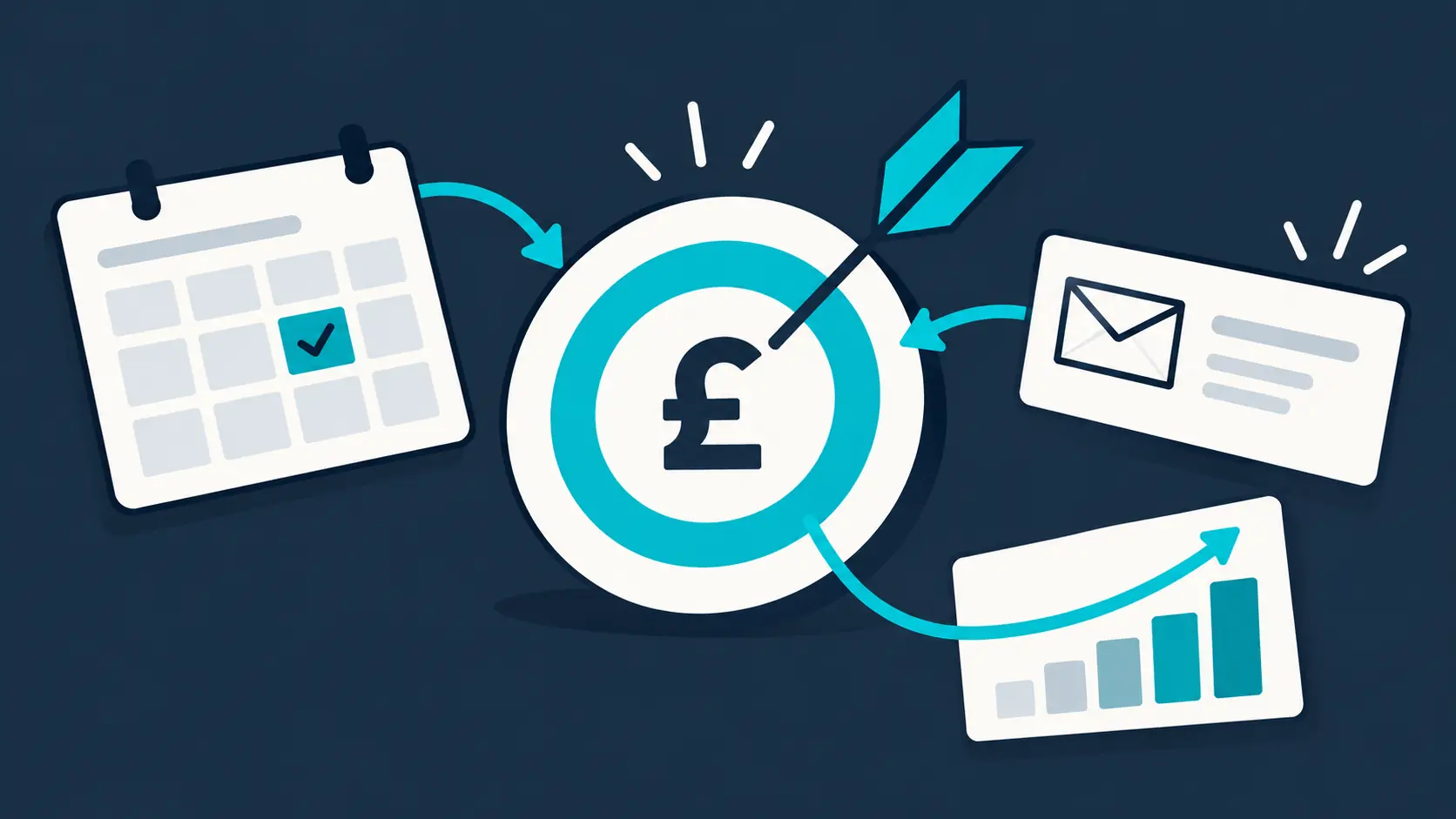
Define success before reading the dashboard
Match the report to your business objective
Your Google Ads are working when they contribute worthwhile enquiries or sales at a cost your business can sustain. Clicks, impressions and a high conversion count are useful evidence, but none proves success on its own. Start with reliable measurement, then connect the report to the quality and value of the business it generates.
A retailer may focus on purchases and margin. A service business may need suitable enquiries that become profitable work. Agree which outcome matters before deciding whether a campaign looks healthy. Otherwise, it is easy to optimise a visible number that has little connection to your priorities.
At Colne Digital, we use Google measurement tools and present campaign information in a dashboard created for the client. Our Google Ads management reviews also need business context to explain what the recorded actions are worth.
What You’ll Learn in this Guide:
By the end of this guide, you’ll understand:
- Which measures help judge commercial performance.
- How to check whether conversions represent real outcomes.
- Why enquiry volume and lead quality need separate attention.
- How to interpret cost per enquiry and return on ad spend.
- What a useful account review should help you decide.
Reading Time:
7–8 Minute Read
Last Updated:
October 2026
Author:
Mark Finlay | Colne Digital

Use a clear sequence of outcomes
Our beginner’s guide to Google Ads introduces the advertising process. To assess results, follow the journey from advert to customer. An impression means an advert appeared. A click means someone interacted. A recorded enquiry means a defined action happened. A qualified enquiry meets your agreed requirements, and a sale is a later commercial outcome.
Those stages should not be interchangeable in a report. Ten form submissions may contain repeat contacts, unsuitable requests or genuine prospects. If the dashboard stops at submissions, it cannot establish how many customers the business acquired.
For ecommerce, a purchase event can provide a stronger connection to a sale, provided tracking and values are correct. Refunds, cancellations and fulfilment costs can still change the final commercial picture.
Check what a conversion actually means
Open the conversion action definitions and test the intended customer journey. A button click should not be presented as a submitted form unless the implementation genuinely measures completion. Check repeat firing and whether the same outcome is recorded through more than one source.
Google’s conversion measurement overview explains the range of actions advertisers can measure. The business must still decide which actions are useful evidence of success. A visit to a contact page is different from receiving an enquiry.
At Colne Digital, we have encountered misleading reporting where a third party had set up tracking incorrectly. That experience reinforces the need to test implementation before drawing conclusions. It does not mean third-party tracking is inherently unreliable.
Review which actions guide bidding
Primary conversion actions generally feed the Conversions column and bidding when their standard goal is selected. Secondary actions usually support observation in All conversions; custom goals can be an exception. Google explains these settings in its primary and secondary conversion guidance.
The practical question is whether the campaign is learning from an action that matters. If an easy page interaction is treated like a valuable enquiry, the campaign may pursue the wrong signal. Review settings rather than assuming the default arrangement fits your business.
Compare advertising cost with enquiry quality
Advertising cost per enquiry is spend divided by recorded enquiries. Qualified enquiry cost uses the subset meeting your agreed criteria. Customer acquisition cost uses customers won and should state which costs are included. These calculations answer different questions.
As a hypothetical example, £600 in advertising spend producing 30 enquiries gives a £20 advertising cost per enquiry. If 12 qualify, the qualified enquiry cost is £50. If three become customers, advertising cost per customer is £200. These figures exclude management fees and other costs.
The example shows why a cheap enquiry is not automatically a good result. Agree what makes an enquiry suitable, then compare like with like over consistent periods. Avoid counting the same contact repeatedly when assessing unique sales opportunities.
Connect the dashboard with business feedback
For lead generation, tell the agency which enquiries fit the work you want and what happened after contact. A simple record can include date, requested service, suitability and outcome. Share only the information needed through an appropriate process.
Our dashboard presents the advertising and tracked outcome data available to it. It does not automatically know whether an unconnected telephone enquiry became a completed job. Later sales outcomes need a suitable measurement connection or feedback from the business.
Where properly implemented and appropriate, offline outcome imports can help connect later lead stages with advertising. That is an implementation decision, not a feature to assume is already active. Website or tracking work may need a developer and a separately agreed fee.
Understand what reported ROAS tells you
Return on ad spend divides attributed conversion value by advertising spend. If £1,000 of spend is associated with £5,000 of recorded sales revenue, reported ROAS is 5 to 1. It does not mean £4,000 of profit. Product costs, fees, refunds and overheads still matter.
For lead generation, conversion values may be estimates assigned to enquiries rather than money received. Label them clearly. A ROAS calculation based on estimated lead values should not be described as confirmed sales revenue.
Review how credit is assigned and whether values are accurate. A strong platform return can be encouraging, but it does not by itself prove that every sale would have been lost without advertising.
Give results enough time without overlooking faults
Compare consistent periods and account for the time between an advert click, an enquiry and a sale. Recent activity may look weaker before later outcomes arrive. Seasonality, availability and changes to the offer can also affect the comparison.
In our experience, new or materially changed campaigns often need several weeks before performance becomes easier to assess. We monitor daily while avoiding unnecessary bulk changes. That monitoring still includes urgent checks when a contact route fails or spend reaches clearly unsuitable traffic.
A small sample is not a sound basis for a confident forecast. Equally, an ongoing learning explanation should not replace investigation when meaningful spend produces little useful business.
Use clicks and impressions to investigate
Click-through rate can help assess whether the advert attracts attention in its context. Average click cost shows what traffic costs. Visibility measures can help identify missed demand. These are diagnostic measures, not substitutes for enquiries and sales.
For example, more clicks with weaker enquiries may suggest a change in traffic intent. A sudden fall in recorded enquiries could be a tracking fault or a real customer issue. Investigate the customer journey rather than assuming a single number tells the full story.
Our Google Ads cost guide provides context for budget discussions. Spending more is useful only when there is a reason to expect the additional spend to support the business objective.
Turn each review into a decision
A useful review explains what changed, what the evidence supports and what should happen next. That might mean repairing measurement, refining a service theme, improving a landing page or continuing a test with a clear budget limit.
Agree the dashboard and review arrangements with your agency. Discuss performance alongside lead quality, capacity and sales feedback. The result should be a clearer decision about the campaign, rather than a longer list of unexplained metrics.
Ready to Take the Next Step?
If your reports show activity but leave you uncertain about value, request a FREE Google Ads audit. We can discuss the conversion definitions, account evidence and business outcomes needed for a useful review.
Frequently Asked Questions About Google Ads Performance
Answers to your questions about measurement and business results.
Use these answers alongside your own campaign data and business objectives when deciding what to do next.
They show more traffic, but not necessarily better business results. Check whether the visits produce relevant enquiries or sales at a sustainable cost.
It depends on the objective. For lead generation, qualified opportunities and customer acquisition costs matter alongside enquiry volume. For retail, revenue needs to be considered with margin and the costs of fulfilling orders.
Possible explanations include different action definitions, duplicate measurement or the inclusion of interactions that are not enquiries. Test the setup and compare the same period before deciding what caused the difference.
No. ROAS compares attributed conversion value with advertising spend. Profit also depends on margins and other costs. Values assigned to leads are not automatically confirmed revenue.
Only where suitable measurement or connected outcome data provides that information. A form submission alone does not reveal a later sale. Otherwise, the business needs to supply appropriate feedback.

Author: Mark Finlay, Founder of Colne Digital. Colne Digital is an Essex-based specialist Google Ads agency supporting businesses across the UK. We focus on campaign strategy, ongoing optimisation and connecting advertising data with feedback about enquiries and sales. Learn more about Colne Digital.